


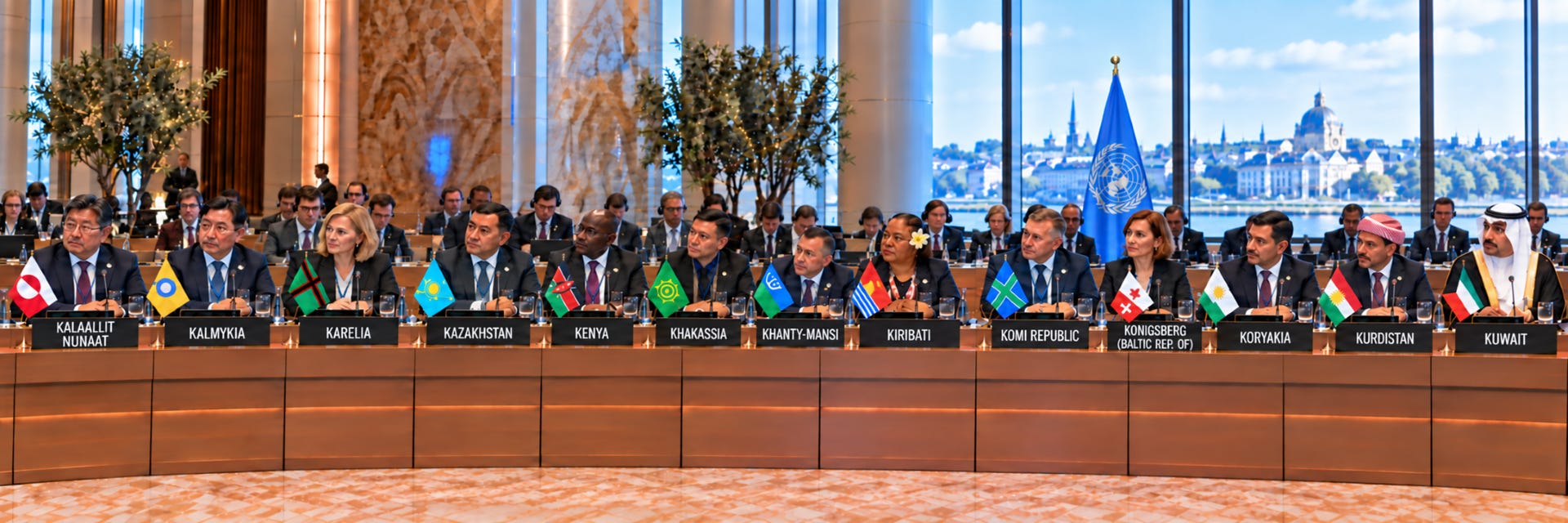
There is a serious case for reconsidering New York as the permanent seat of the United Nations as the United States persistently prevents delegations from reaching UN Headquarters. The issue has become especially acute in 2025–26. The United States denied Palestinian President Mahmoud Abbas and other Palestinian representatives visas for the General Assembly in both 2025 and 2026, even though the State of Palestine has official observer status at the United Nations. The General Assembly responded last month by expressly regretting those decisions, invoking the 1947 Headquarters Agreement and making special arrangements for Palestinian participation.
The United States has definitely weakened its claim to be an appropriate host of the UN. U.S. performance of its obligations as host, especially access to UN Headquarters; withdrawals from international organizations, and threats against other states has made the U.S. a pariah among nations and unworthy of a host to the world’s most important international organization.
The governing instrument regarding Washington’s obligations to the UN is the 1947 Agreement Between the United Nations and the United States Regarding the Headquarters of the United Nations.
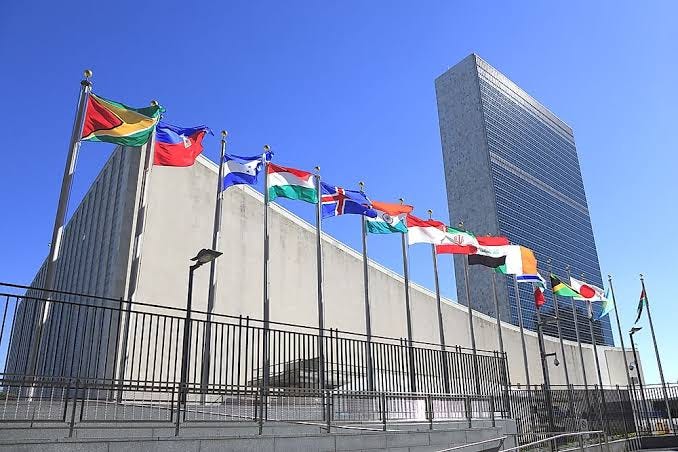
Sections 11–13 are unusually strong. Section 11 generally prohibits U.S. authorities from imposing impediments on transit to and from UN Headquarters by covered representatives. Section 12 says that protection applies irrespective of relations between the United States and the government concerned. Section 13 provides that U.S. immigration laws cannot be applied so as to interfere with those privileges and that required visas must be issued without charge and as promptly as possible.
That matters because hosting the UN necessarily means accepting diplomats whom Washington intensely dislikes.
The UN’s longstanding legal position has consequently been that covered representatives have an unrestricted right to enter the United States for the purpose of proceeding to the headquarters district.
Those favoring a relocation of the UN Headquarters to a more neutral location — Geneva, the location of many UN specialized agencies and the UN’s forerunner, the League of Nations — cite five reasons for such a move. First, a host country shouldn't be able to determine who participates in the UN. If Washington can prevent representatives of governments or UN-recognized entities it opposes from physically reaching headquarters, U.S. foreign policy effectively becomes an impediment to participation in the international organization. That conflicts with the institutional rationale behind Sections 11–13.
Second, the General Assembly's September 2026 resolution explicitly says Palestinian representatives should have been able to participate in person and records the U.S. visa denials in both the 80th and 81st sessions.
Third, Washington did issue visas to senior Iranian leaders for this year's General Assembly despite the extraordinary U.S.-Iran confrontation, but subsequently ordered Foreign Minister Abbas Araghchi's delegation to leave New York early. The U.S. State Department also prohibited members of the Iranian press from accompanying the Iranian delegation.
Fourth, the UN was already documenting serious complaints about U.S. visa delays and denials years ago. The UN Legal Counsel reiterated the organization's longstanding interpretation of the Headquarters Agreement during those disputes. Problems with member state access to UN proceedings increased calls for relocation of UN Headquarters to a less hostile location.
Fifth, neutral territory could increase the UN's institutional independence. During the U.S. war with Iran, Washington decided which opposing officials could enter the United Nations, where they could travel, and how long they could remain. That is simply unacceptable for a host to the United Nations.
The United States remains the UN's largest debtor. The U.S. is assessed at 22% of the UN regular budget and roughly 26% of the peacekeeping budget. Current estimates put outstanding U.S. peacekeeping assessments alone at more than $2.3 billion. The only reason the United States paid $725 million toward its outstanding UN dues obligation last month was that its scofflaw status threatened to have its right to vote in the General Assembly suspended. That payment did not bring the United States current. The UN has stated that 95% of arrears in regular-budget contributions are attributable to the United States.
With the United States regressing into an authoritarian body politic, moving the UN is becoming a more attractive alternative. The United Nations Office at Geneva already constitutes a major UN center. Vienna and Nairobi are important UN centers as well. Any three would be a more stable location for the UN.
The UN has already witnessed the Trump administration withdrawing the United States from a number of UN specialized agencies, a possible prelude to carrying out a long-held desire of the American far right — withdrawal from the UN altogether.
Rather than an immediate relocation from New York, the move could be gradual. The General Assembly, for example, could begin holding more high-level sessions outside New York. Additional agencies and the Secretariat functions could begin migrating elsewhere, thus avoiding an immediate multibillion expenditure.
The presence of the United Nations in New York represents another era, one that two Trump terms as president has destroyed. The UN Headquarters in New York sits on land donated by the internationalist Rockefeller family during the post-1945 international order. Roosevelt/Truman-era internationalism, the Marshall Plan, NATO, Bretton Woods, and the postwar alliance system is dead thanks to Trump’s dogmatically far-right “America First” movement.
Moving the UN out of New York would result in a substantial financial loss to Trump. The Permanent Mission of Qatar owned three Trump World Tower apartments when Trump took office and purchased a fourth for $6.5 million in January 2018. A House Oversight investigation estimated Qatar paid about $465,744 in building charges during 2017–2020. The Permanent Mission of India purchased two Trump World Tower units for about $5.1 million in 2002. Court records subsequently described the mission as continuing to own the units and pay common charges. The Permanent Mission of Kuwait owned a Trump World Tower unit purchased in 2012 for $4.15 million. The congressional investigation estimated approximately $152,664 in building charges during Trump's first presidency. The Islamic Republic of Afghanistan’s Permanent Mission bought a $4.235 million apartment in 2009 as the residence of its UN ambassador. Saudi Arabia, Kuwait, the United Arab Emirates, and Greece all lease units at Trump World Tower.
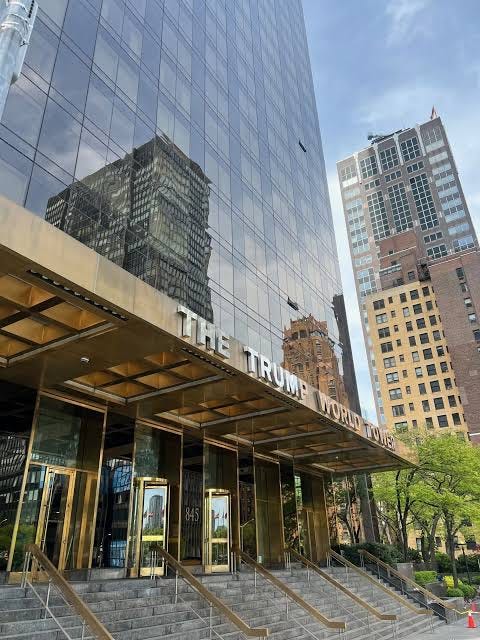
The Trump World Tower at 845 UN Plaza
Relocation of the UN could create the political moment for a broader constitutional conference to substantially restructure the UN for the first time since the end of World War II. Under the current UN Charter, the five permanent members — the United States, United Kingdom, France, Russia, and China — are entrenched in Article 23, and Charter amendments require a two-thirds General Assembly vote and ratification by two-thirds of UN members, including every permanent Security Council member. Currently, such amendments would be a tall order. However, should Trump withdraw from the UN or suspend its membership and the Russian Federation dissolve amid a general uprising, the other three members would be more disposed to usher in charter amendments. The mechanism would be a UN Charter Review Conference under Article 109. Article 109 expressly provides for a general conference of UN members to review the Charter. Amendments to the charter could include a new headquarters, Security Council restructuring, veto reform, membership reform, and succession rules for dissolved states.
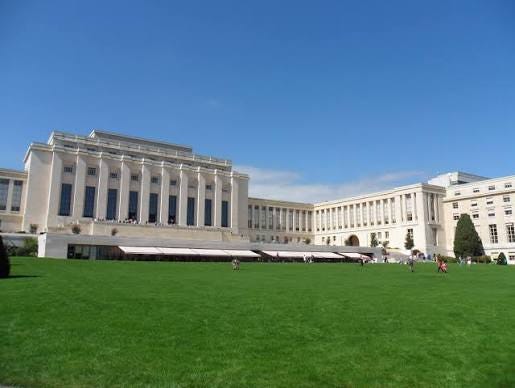
Palace of Nations in Geneva. the site of the League of Nations (of which the U.S. refused to be a member) and a potential alternative UN Headquarters
Succession rules for dissolved states has posed a problem for the UN. Article 23 still literally names “the Union of Soviet Socialist Republics,” not the Russian Federation, as a permanent member. Russia has occupied that seat since the USSR disappeared in 1991. Ukraine has rightly questioned Russia’s occupation of the seat of the defunct USSR. It claims that Russia had no inherent right to the seat because the nation possessing a veto and seat on the Security Council ceased to exist and, therefore, Russia should have been admitted to the UN in the same manner as the other 14 former states of the USSR. If the Russian Federation itself ceases to exist and were replaced by several sovereign states—say, Russia plus some combination of Tatarstan, Bashkortostan, Sakha, Buryatia, Tuva, Karelia, Komi or others—the same situation that existed with the former USSR in 1991 would arise.
The UN realized that it made an error with the USSR and its successor states in 1991. When the Federal Republic of Yugoslavia collapsed, the UN did not automatically recognize Serbia’s claim to Yugoslavia's UN seat. Another Russian dissolution will reopen the question of continuity rather than automatically transferring the Security Council permanent seat to whatever government controls Moscow.
Today a new country cannot simply obtain UN membership through a General Assembly supermajority. Article 4 requires Security Council recommendation followed by General Assembly approval. The UN explains that the Council recommendation requires nine affirmative votes and no veto from a permanent (P5) member; the General Assembly then needs a two-thirds majority.
If the Russian Federation dissolved into twelve or more internationally recognized states, under today’s rules, each new state might need to seek membership while the Security Council simultaneously confronted the unresolved question of who inherited Russia’s veto. This situation could allow the claimed Russian successor, along with the pro-Russian Trump administration, to block admission of former Russian territories whose independence they opposed.
A reconstituted Security Council could instead have perhaps 20–25 elected members, with longer terms for some seats and guaranteed geographic representation.
For example, representation could be allocated among Africa, Asia-Pacific, Europe, Latin America/Caribbean, Middle East, and other regional groupings, while giving particularly large contributors or populations opportunities for longer rotating terms. No country would possess a seat permanently. That would also address a historical anomaly: the permanent membership structure reflects the balance of power in 1945, not that of the twenty-first century.
As far as veto reform is concerned, a UN constitutional conference could require two or three negative votes from designated major-power members rather than allowing one country to veto action by itself. Another possibility would prohibit vetoes concerning membership applications, genocide or mass atrocities, while retaining them for direct Chapter VII military action.
Palestine currently illustrates how the existing system works. Even overwhelming General Assembly support cannot substitute for the required Security Council recommendation. The International Court of Justice has previously concluded that the General Assembly cannot simply admit a country without that recommendation. A revised Charter could instead establish that admission is authorized by a two-thirds General Assembly majority, without a Security Council veto.
The UN has repeatedly confronted state fragmentation: USSR, Yugoslavia, Czechoslovakia, Sudan and others. But there is no simple automatic rule saying that every autonomous republic that declares independence becomes a UN member.
A reformed Charter could establish explicit criteria for successor states arising from a peacefully or violently dissolved federation—for example, effective government, defined territory, demonstrated popular consent, respect for minority rights, acceptance of existing international boundaries and willingness to assume Charter obligations. Under such revised criteria, two nations resulting from the dissolved member states of Somalia, Iraq, and Yemen — Somaliland, Kurdistan, and South Yemen — could apply for UN membership.
The comparatively successful precedent after the Soviet and Yugoslav dissolutions was generally to transform existing internal republican boundaries into international boundaries rather than allowing every ethnic enclave to redraw borders.
So if Russia fragmented, the strongest presumptive candidates for statehood would be constitutionally defined federal subjects—not every separatist organization or historical territory claiming independence.
Even then, each case would present difficult questions of democratic legitimacy, borders, minority populations, nuclear weapons, treaty succession, debts and international recognition.
The original 1945 San Francisco Conference designed an international organization for the world emerging from World War II. A future Charter conference could ask whether institutions designed around the victorious powers of 1945 remain appropriate after another major geopolitical transformation.
Its conceptual package might be:
New headquarters to reduce dependence upon any single great power.
Charter convention to reconsider the 1945 institutional settlement.
No permanent national Security Council seats to allow for geographically representative rotating membership.
Restricted or abolished unilateral veto to prevent one state from immobilizing the organization.
General Assembly-controlled admissions to prevent a single major power from blocking new states.
Formal succession rules to establish procedures when federations dissolve.
Expanded Security Council representation to address the dramatic increase from 51 original UN members to 193 today.
The existing P5 would have to agree to constitutional changes eliminating their own privileges. That might become easier should the United States, under Trump. withdraw from the UN, and the Russian Federation dissolve.
The disappearance of two permanent-member states — United States and Russia, combined with a broad coalition demanding fundamental changes in the UN, would represent the “perfect storm” to create a United Nations 2.0.
Considering Trump’s extensive withdrawal from various international organization, the UN must be prepared for a U.S. withdrawal from the organization, The signs for such action are numerous. In January 2025, rump ordered a second U.S. withdrawal from the World Health Organization. In February 2025, he ordered non-participation in the UN Human Rights Council, continued the funding prohibition concerning UNRWA (United Nations Relief and Works Agency for Palestine Refugees) and ordered a comprehensive review of American participation in international organizations. In January 2026, the administration ordered withdrawal from 66 international organizations, including 31 UN entities. The UN-related list encompasses bodies dealing with women, population, climate change, children in armed conflict, sexual violence, peace building, and international law.
Trump has gone considerably beyond withdrawal from the Human Rights Council. The U.S. has imposed sanctions on officials associated with the International Criminal Court and on UN Special Rapporteur Francesca Albanese. Reuters reported in February that eight ICC judges and three prosecutors had been sanctioned and described significant practical consequences for sanctioned individuals. The U.S. argues that the ICC lacks legitimate jurisdiction over U.S. and Israeli nationals and that the sanctions defend American sovereignty.
The U.S.’s adoption of fascist authoritarianism and Western Hemispheric domination makes it an unsuitable host for any international organization. On September 23, 2026, the Organization for Security Cooperation in Europe’s (OSCE’s) Office for Democratic Institutions and Human Rights announced that the United States had not invited the OSCE to observe the 2026 midterm elections. The OSCE consists of 57 participating states across North America, Europe, and Central Asia. According to the OSCE, this is the first U.S. federal election since its observation program began in the U.S, for which it has not received an invitation. The OSCE says this is inconsistent with commitments undertaken in the 1990 Copenhagen Document. The organization had observed 12 previous U.S. federal elections, including six midterms.
The United States received the privilege of hosting the United Nations in the aftermath of World War II, when American leaders were instrumental in constructing an international order based upon collective security, diplomacy and international law. Eight decades later, the occupant of the White House has praised Adolf Hitler and Benito Mussolini, along with present-day dictators like Vladimir Putin, Kim Jong Un, and Xi Jinping.
V-Dem's 2026 Democracy Report records an exceptionally large deterioration in the United States during 2025, particularly involving constraints on executive power, rule of law, freedom of expression and academic and cultural freedom. Its Liberal Democracy Index moved the United States from 20th to 51st of 179 countries. Democracies traditionally advertise independent courts, independent prosecutors and acceptance of adverse judicial decisions as distinguishing characteristics of constitutional government.
The UN Charter begins with four central ideas: maintaining international peace through collective action; peaceful settlement of disputes; sovereign equality and self-determination; and international cooperation promoting human rights. The Trump regime fails on all counts. If the U.S. doesn’t withdraw from the UN, there is a strong case for it to be expelled or suspended from the organization.